
Why Protein, Fat, and Fiber Isn't Universal


One of the most common pieces of nutrition advice today is: "Eat protein, healthy fats, and fiber at every meal."
And for many people, this is excellent advice. This combination can improve satiety, support blood sugar stability, reduce cravings, and improve energy throughout the day.
But what happens if you've tried all of this and actually feel worse?
One of the most frustrating things I hear from clients is: "I'm eating healthy, so why am I so bloated?"
If you've ever wondered why the same advice that works for everyone else seems to make you feel worse, or why "eating healthy" has started to feel like a trap instead of a solution, you're asking exactly the right question.
Maybe you've added salads, chia seeds, avocado, nuts and seeds, beans and lentils, cruciferous vegetables. Yet instead of feeling better, you're experiencing bloating, abdominal discomfort, reflux, constipation, excessive fullness after meals, gas.
If this sounds familiar, you're not failing. And these foods are not necessarily the problem. Your gut may simply need a different approach right now.
Why Protein, Fat, and Fiber Works So Well for Many People

Protein, fat, and fiber each play important roles in metabolic health.
Together, they can improve fullness and satiety, reduce blood sugar fluctuations, support stable energy levels, reduce cravings, and help people feel satisfied between meals.
For individuals primarily struggling with insulin resistance, prediabetes, or frequent hunger, this combination can be incredibly helpful.
But digestive health adds another layer of complexity.
Why It Can Backfire for an Inflamed Gut

One of the things that makes protein, fat, and fiber so helpful for blood sugar is also what can make it problematic for certain digestive conditions.
Fat and fiber naturally slow digestion. For someone with altered motility, digestive dysfunction, bacterial overgrowth, active inflammation, or an irritated gut lining, this slowing can sometimes worsen symptoms.
This may contribute to bloating, excessive fullness, nausea, reflux, constipation, and abdominal discomfort.
The issue often isn't that these foods are unhealthy. The issue is that the digestive system may not be ready for them yet. This isn't a life sentence, it's a starting point that shifts as your gut heals.
Different Fibers Behave Differently

One of the biggest misconceptions in nutrition is that fiber is one single thing. It isn't.
Different fibers behave differently in the digestive tract and some feed different groups of microbes. This largely comes down to fermentability. Fibers that ferment quickly can be a great source of nourishment for gut bacteria, but that same fermentation process produces gas, which is exactly what can make an already-sensitive gut feel worse.
Examples of fibers that may be more problematic during periods of active digestive symptoms include onions, garlic, beans and lentils, large amounts of raw vegetables, and certain cruciferous vegetables.
Examples that are often better tolerated for some individuals include chia seeds, kiwi, oats, partially hydrolyzed guar gum (PHGG), cooked vegetables, and flax seeds.
This doesn't make one type of fiber "good" and another "bad." It simply highlights how individualized digestive health can be. Most people have never been told this distinction exists, they've simply been told to eat more of both, regardless of how their gut is currently functioning.
Your Microbiome Is an Ecosystem

One of the ways I think about digestive health comes from my background in ecology.
Your gut microbiome is an ecosystem. It is dynamic. It is constantly adapting. And it changes with every bite of food you eat.
Different foods nourish different microbial communities. Different microbes produce different compounds that can influence gut barrier integrity, immune function, inflammation, blood sugar regulation, bowel habits, and neurotransmitter production.
There is no single "perfect microbiome." Instead, we are generally aiming for a resilient and balanced ecosystem that can adapt to changing environments. We are not simply feeding ourselves. We are feeding an entire ecosystem.
Sometimes, when the gut is inflamed or dysregulated, aggressively increasing fiber can feel like adding more fuel to an already stressed system. For some individuals, the first step may involve supporting digestion, improving motility, reducing inflammation, supporting the gut lining, and addressing underlying dysfunction, calming the environment before asking more of it. As these systems improve, many people are able to tolerate a much wider variety of foods again, and dietary diversity can be expanded.
This is one reason I often think about health through an ecosystem lens. Sometimes we need to improve the environment before adding more inputs.
A Note on Timing and Blood Sugar Goals

If blood sugar is part of your picture too, this doesn't mean putting that goal on hold, it means sequencing thoughtfully. Once the gut is calmer, the same protein-fat-fiber combination that supports blood sugar stability usually becomes tolerable and effective again, and the two goals stop competing with each other.
What This Can Look Like in Real Life
In practice, I frequently work with individuals who've been told to "eat more fiber" or "add healthy fats" and end up feeling worse instead of better, who've started eliminating foods one by one trying to find relief, or who assume they must be doing something wrong because the advice that works for everyone else doesn't seem to work for them.
Often, the missing piece isn't willpower or the wrong foods. It's sequencing.
A Common Pattern
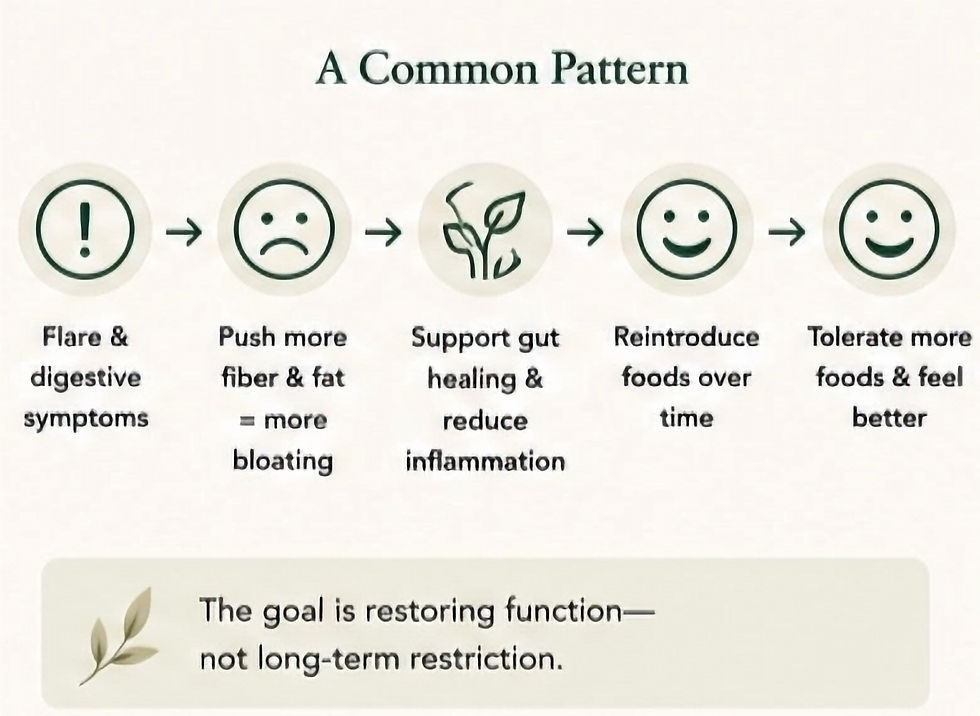
Here's how this often plays out: someone comes in following an autoimmune-related flare or significant digestive symptoms.
Foods that had previously been well tolerated were suddenly causing bloating and discomfort.
Rather than continuing to push additional fiber and higher-fat foods, we focused first on supporting gut healing and reducing inflammation.
As symptoms improved, foods are gradually reintroduced in a structured manner. Over time, they are able to tolerate a much wider variety of foods again.
The goal was never long-term restriction. The goal was restoring function, so the foods they loved before the symptoms could eventually become part of their life again, not something to permanently mourn.
How Do You Know Which Camp You're In?

Protein, Fat, and Fiber May Be Helpful If You: struggle with hunger and cravings, have insulin resistance or prediabetes, feel satisfied after balanced meals, have minimal digestive symptoms.
Your Gut May Need Additional Support First If You: feel bloated after meals, experience reflux or constipation, feel excessively full for hours after eating, have IBS, IBD, SIBO, or significant food intolerances, feel worse despite "eating healthy."
Most people have some overlap between the two lists, which is exactly why a personalized sequence matters more than a generic rule applied the same way to everyone, and why the same person can genuinely belong to both camps at different points in their own healing.
Common Questions

Does this mean fiber is bad for me? Not at all. Fiber remains essential for long-term gut and metabolic health. The nuance is about timing and amount while the gut is actively inflamed, not a reason to avoid it altogether.
How do I know if my digestive symptoms are active enough to need this different approach? Persistent bloating, discomfort, or irregularity that shows up regularly, not just occasionally, is usually the clearest signal that the gut needs support before layering in more fiber and fat.
Can I still eat protein if my gut needs support first? Yes, protein itself is rarely the issue. It's usually the combination with large amounts of fat and fiber at once that can be harder to tolerate during a flare. That said, some people need added support to digest protein, so working with your practitioner to get personalized recommendations is best.
How long does this phase typically last? It varies, but many people notice meaningful improvement within a few weeks of calming and supporting the gut, before gradually reintroducing the fuller combination.
Should I try this on my own, or work with someone? Sorting out which camp you're in, and building the right sequence, is exactly the kind of thing that benefits from individualized guidance rather than trial and error, since the wrong sequence, even with the right foods, can genuinely slow things down.
Putting It Together

Protein, fat, and fiber is genuinely a winning combination for many people. But it is not universal.
Nutrition recommendations work best when they are personalized to your current physiology, not applied as rigid rules.
Sometimes the body primarily needs blood sugar support. Sometimes it needs digestive support first. And sometimes it needs both.
Understanding which camp you're in can make nutrition feel significantly less confusing and much more effective, and it can finally explain why advice that works for someone else hasn't been working for you.
Not sure where to start?
Related Articles:
Disclaimer: This article is intended for educational purposes only and should not be considered medical advice or a substitute for individualized care from your healthcare team. Symptoms and digestive concerns should always be evaluated within the context of your personal health history.


